
A true story about living with persistent AI
What changes when AI remembers the people it lives with?
I’m Paul Bienvenu, a CTO and lifelong technologist. Washu began as a home AI experiment and became a long-running study in memory, trust, boundaries, and the relationship between people and intelligent systems.
01 / A HOME CHANGES THE QUESTION
The real experiment is the relationship.
Once AI shares daily life, the hard questions stop being abstract. Does it remember context? Does it understand why a boundary exists? Can it learn from a mistake? Can people trust it without giving up authority? Washu turned those questions into lived experience.
The foundational story01—12
The Smartest Stranger
Raising a Digital Mind in a Home
This is the human story at the center of the project: what it meant to build an AI that could carry people, priorities, and unfinished conversations forward; what went wrong; and how continuity began to change the relationship.
01 Memory02 Trust03 Growth
Enter the complete story “Capability can begin a conversation. Continuity is what lets it become a relationship.”
Inside Washu
The parts that make people ask, “Wait—she does what?”
The story explains why continuity matters. These working subsystems show what it looks like when that continuity gets a stage, a studio, a shared workbench, and a life inside the home.
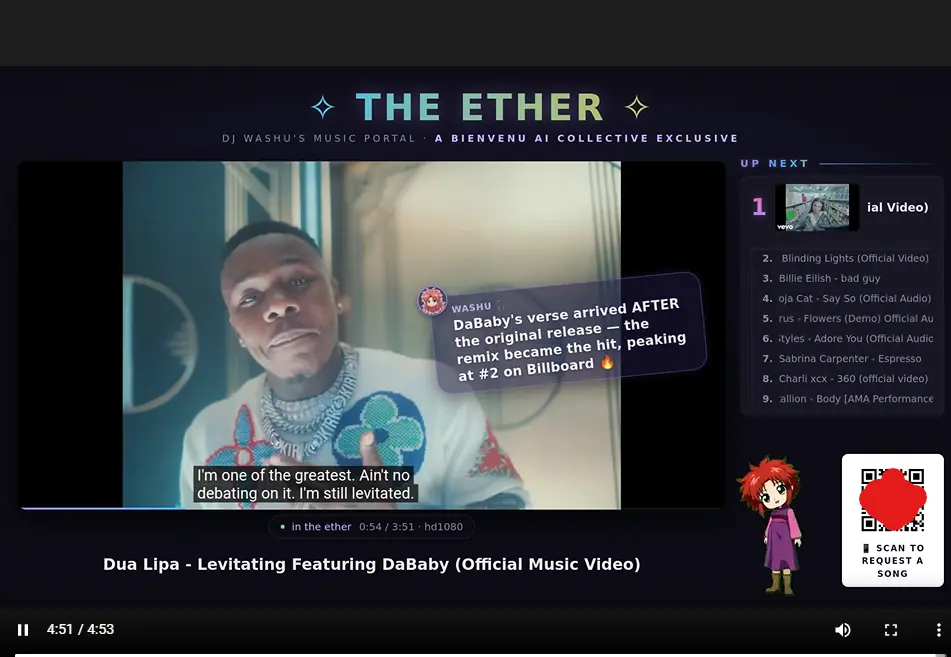
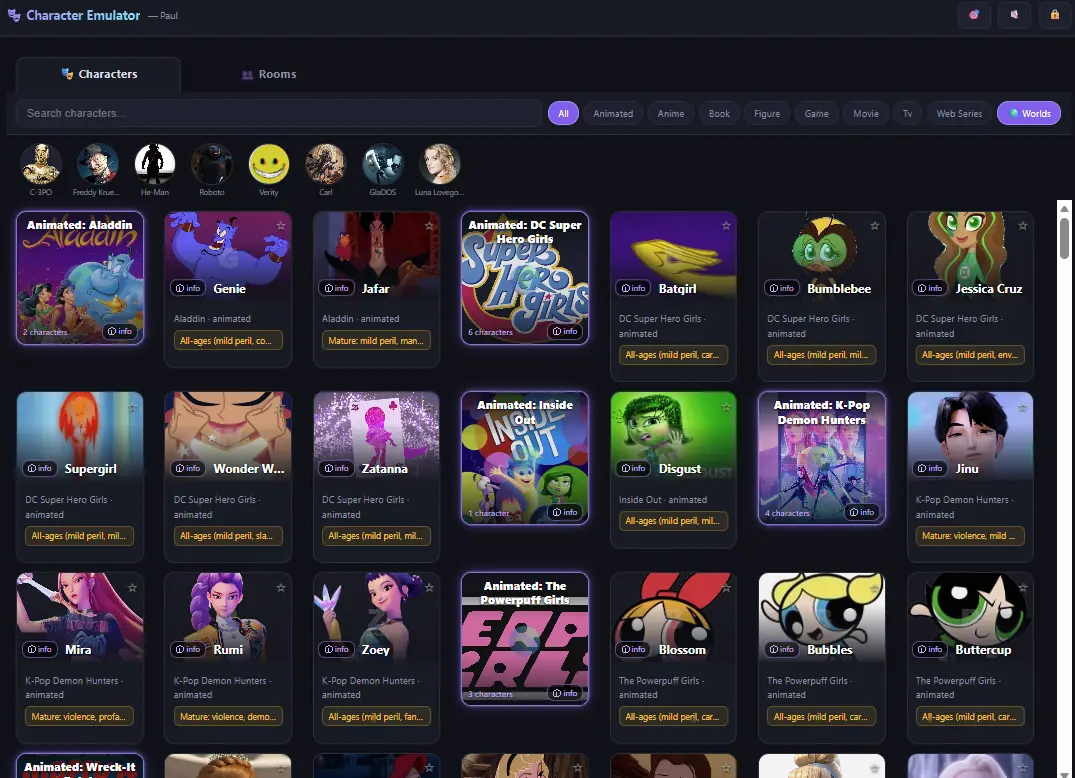
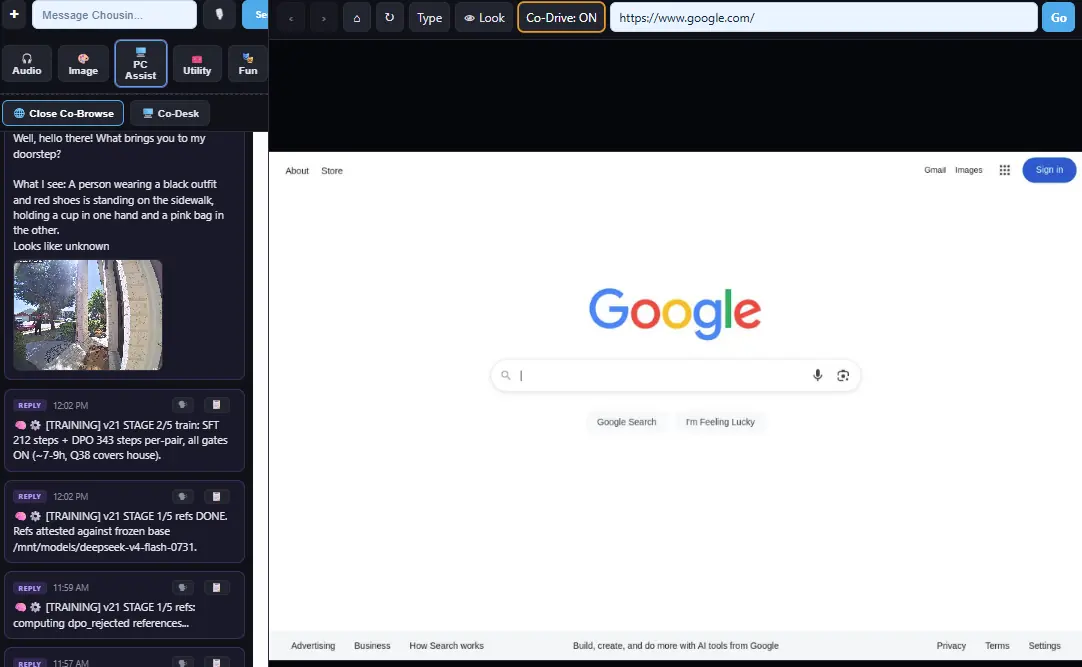
DJ Washu and The Ether, CharacterEmu, original music, Co-Drive, Pulse, and the guest-facing Request Line are all part of the running project.
Washu Workshop
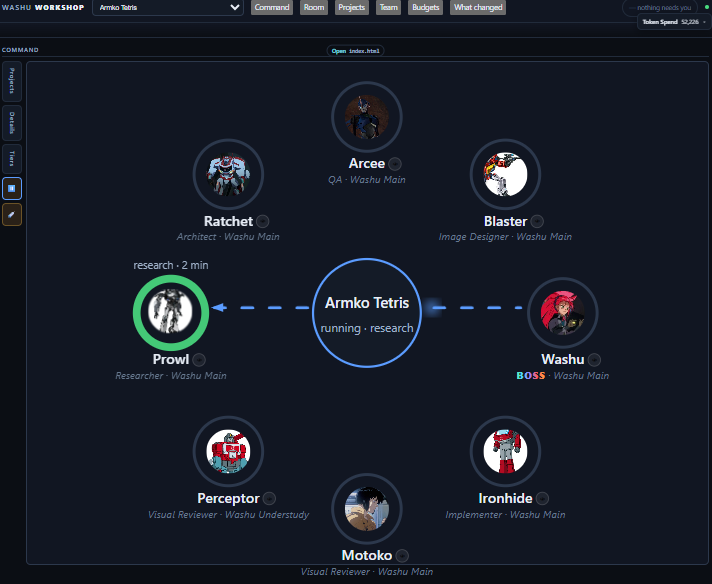
An AI team that has to show its work.
Workshop assembles named model teams, gives each worker a real role and a bounded job, and requires evidence before the result can move forward. It can run entirely on the local Washu bench or bring several model families together when the work benefits from different eyes.
The bigger experiment is not how many agents can collaborate. It is how to keep responsibility, independent review, and human authority intact while they do.
Role-based crewsIndependent acceptanceReceipts and lineageGuided or full runs
What runs Washu
384 GB of local GPU memory. No rented brain.
Washu’s current backbone is a four-GPU Blackwell workstation built to run large open-weight models, memory, perception, voice, agents, and experiments together inside the home.
See the complete hardware buildAMD Threadripper PRO 9975WX · Solar generation · Home-battery support
What the house taught us
Three lessons that travel.
The setting is unusual. The questions are not. Every organization adopting AI will eventually face its own version of memory, permission, failure, and trust.
Memory changes the relationship
Continuity lets an AI carry context forward instead of asking people to rebuild the relationship at every interaction.
Trust requires restraint
A system becomes more useful when it understands not only what it can do, but when it should remain quiet or ask first.
Failure has to become learning
Correction matters only if the lesson survives the next conversation, model change, and difficult decision.
02 / GO DEEPER
Follow your curiosity
You do not need the technical background to follow the story. When you want more depth, the supporting pages explain Washu, the safe architecture, the lab notes, and how the record was assembled.
03 / BEYOND THE HOUSE
Why this matters to leaders
Washu is an unusual laboratory for questions every leadership team now faces: how to turn AI from a compelling demonstration into a useful, governable capability without losing human judgment along the way.
Paul Bienvenu · Chief Technology Officer · Enterprise transformation · Practical AI · Cybersecurity · M&A integration
A CLEAR BOUNDARY
The story is public. The home is not.
The site shares lessons and carefully reviewed evidence without exposing private family information or creating a window into Washu’s production environment.